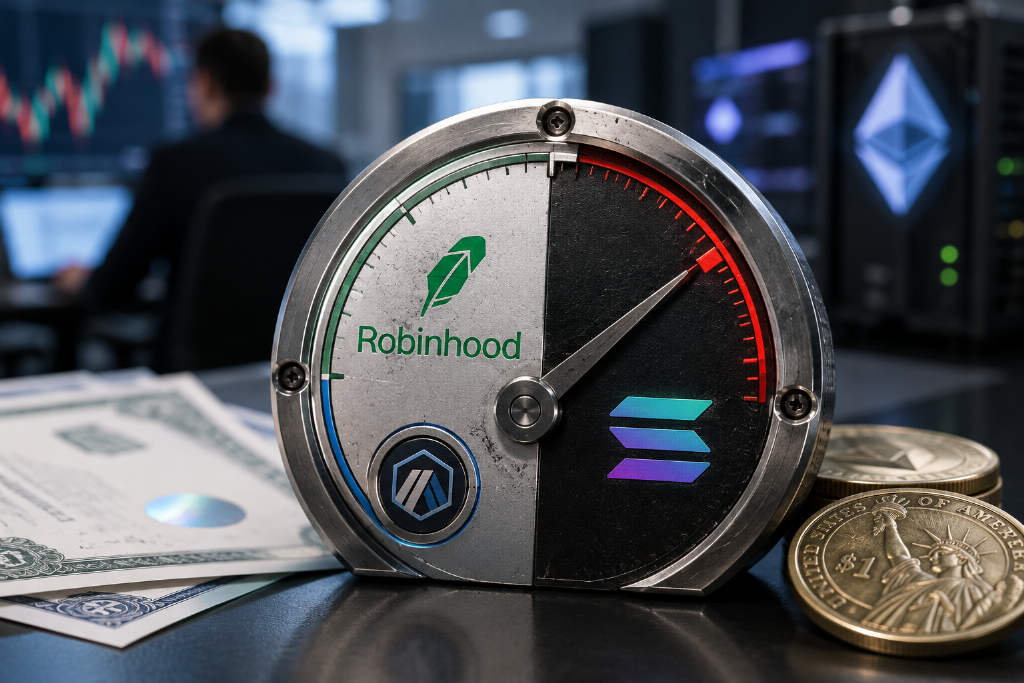
Robinhood Chain fee debate puts Solana and Arbitrum models head to head
A public debate over Robinhood Chain’s fee model has exposed a deeper split in crypto infrastructure strategy: should blockchains push transaction costs as low as possible, or should they prioritize durable business models for the chains and applications built on top of them? The argument began after Robinhood Chain, an independent Layer 2 built on Arbitrum Orbit and launched on July 1, 2026, saw average gas fees climb to about $0.4 in early September. According to the article, that level was more than 100 times higher than comparable costs on Solana and roughly twice the cost of transactions on Ethereum mainnet. Solana co-founder Anatoly Yakovenko argued that the 10% revenue share Robinhood sends to the Arbitrum ecosystem would have been enough to cover several times the fees of similar activity on Solana, making near-zero gas possible for users. Offchain Labs co-founder Steven Goldfeder pushed back, saying the real point is revenue ownership: on Arbitrum, Robinhood keeps about 90% of gas revenue, while on Solana it would collect none of the base network fees. The discussion later widened to include BNB Chain growth lead Nina Rong, who argued that the industry’s top priority is no longer simply cutting gas, but building commercial structures that can fund technology, growth, and long-term network maintenance.